tl;dr
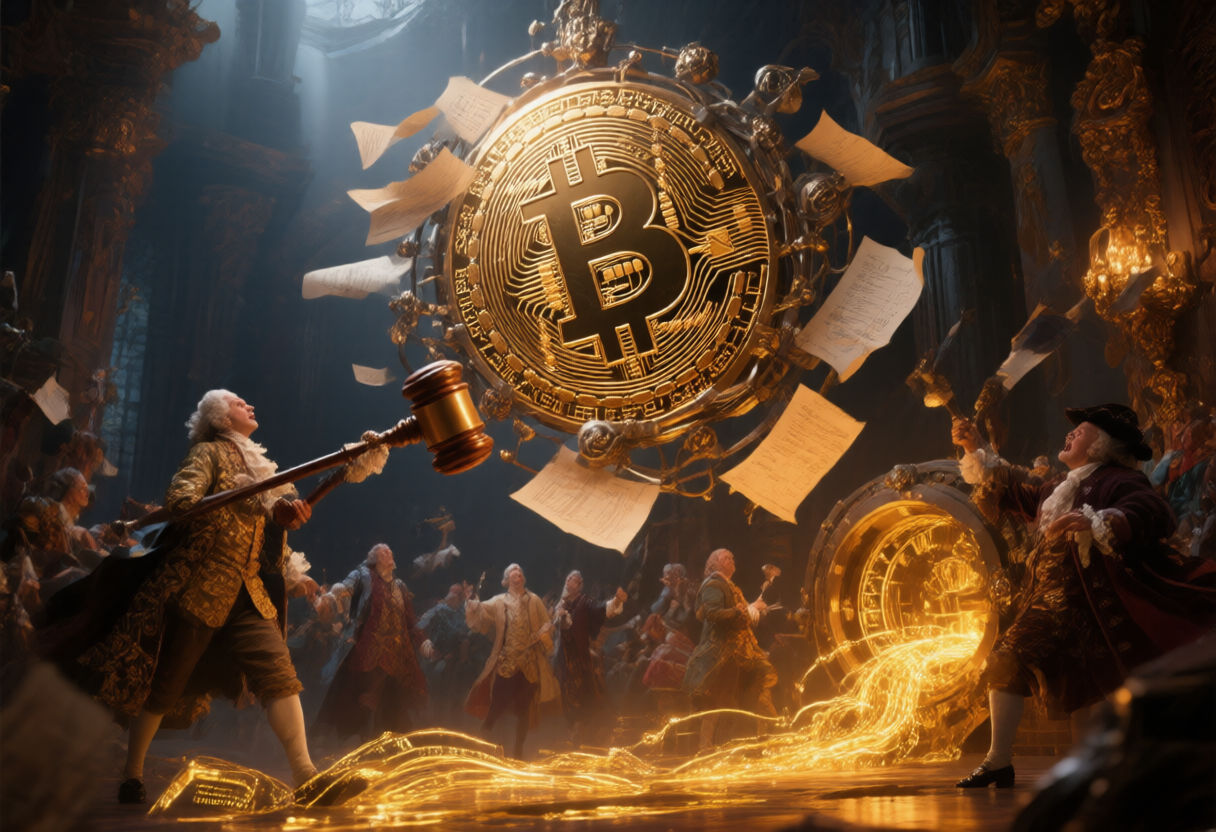
Bitcoin faces a pivotal governance battle over data storage limits via BIP-444, sparking debates about legal risks, decentralization, and ideological divides within the community.
**Bitcoin’s Existential Dilemma: The Battle Over Data Storage and Governance**
Bitcoin, the pioneering cryptocurrency and blockchain network, is grappling with a profound question: *How much data should live on its ledger?* At the heart of this debate is Bitcoin Improvement Proposal 444 (BIP-444), a contentious proposal aimed at rolling back a recent upgrade to the OP_RETURN function—a move that has ignited fierce ideological clashes within the community.
### The OP_RETURN Controversy
The OP_RETURN function, part of Bitcoin’s scripting language, allows users to attach small amounts of metadata—such as text, images, or digital signatures—to transactions. In Bitcoin Core 30.0, released earlier this month, the capacity of OP_RETURN was expanded from 80 bytes to 100,000 bytes, effectively transforming Bitcoin into a limited-purpose data ledger. Proponents argued this enhancement could enable use cases like timestamping, document verification, and decentralized authentication without compromising Bitcoin’s core role as a monetary asset.
However, critics, including long-time developer Luke Dashjr, warned of significant risks. They contended that the update could enable malicious actors to upload illegal content, such as child sexual abuse material (CSAM), directly onto the blockchain. Dashjr and his allies argued that ordinary users running full nodes—essential for validating the network—could face legal exposure simply by storing these transactions.
### BIP-444: A Proposed Solution
BIP-444 seeks to address these concerns by implementing a temporary one-year soft fork. The proposal would reduce OP_RETURN capacity back to 83 bytes, limit OP_PUSHDATA to 256 bytes, and cap ScriptPubKeys at 34 bytes. Supporters claim this would "close the gap being abused" while giving developers time to refine less restrictive rules. They emphasize that the soft fork would preserve Bitcoin’s legal neutrality by preventing the standardization of data storage at the consensus level.
The proposal’s language, however, has drawn sharp criticism. It warns that rejecting the fork could lead to "moral and legal consequences" and suggests dissenters might "end up forking into an altcoin like Bcash." Critics labeled this rhetoric coercive, accusing the proposal of undermining Bitcoin’s ethos of voluntary consensus.
### Ideological Divides and Community Reactions
The debate has exposed deep ideological rifts. While BIP-444’s backers argue it’s a necessary defense against legal vulnerabilities, opponents see it as a misguided overreach. Canadian cryptographer Peter Todd mocked the proposal by embedding its entire text into a transaction while complying with its restrictions, highlighting what he called "logically inconsistent" rules.
Alex Thorn of Galaxy Digital called the soft fork "an attack on Bitcoin" and "incredibly stupid," while BitMEX Research warned it could inadvertently incentivize abuse. The firm argued that bad actors might exploit the proposal to launch double-spending attacks by embedding illegal content on-chain.
Dashjr, however, dismissed these critiques, stating that "no technical objections" have been raised. He emphasized that BIP-444 is a User-Activated Soft Fork (UASF), meaning its adoption would be driven by users, not miners. He cautioned that a hard fork to defend controversial content could create a "CSAMchain," a dystopian scenario where Bitcoin’s integrity is compromised.
### Practical Implications and Market Impact
Despite the heated debate, the practical impact of the OP_RETURN upgrade and BIP-444 remains uncertain. Only 6.5% of nodes have upgraded to Bitcoin Core 30.0 since its launch, indicating widespread caution. Meanwhile, Bitcoin’s price has fluctuated amid broader macroeconomic pressures, such as US-China trade tensions, rather than the governance dispute.
However, the philosophical stakes are clear. Bitcoin’s legitimacy hinges on its neutrality, allowing users to transact without permission or oversight. As blockchain data becomes more expressive, this neutrality risks eroding. If a single transaction could expose node operators to prosecution, decentralization itself could be jeopardized.
### A Pivotal Moment for Bitcoin Governance
BIP-444 represents Bitcoin’s first major consensus-level change since the Taproot upgrade in 2021. Whether it passes or fails, the controversy underscores a maturing challenge: balancing immutability with accountability in an era where blockchains increasingly serve as permanent data repositories.
As the debate unfolds, the outcome will not only shape Bitcoin’s technical direction but also test the resilience of its decentralized governance model. In a world where blockchains intersect with law, ethics, and power, the path forward remains as uncertain as it is critical.